A slow or gurgling drain is almost never random. It is usually one of a handful of specific culprits, and knowing which one you are dealing with is the difference between a five-minute fix and a problem that keeps coming back. Here is what typically causes it, what is worth trying yourself, and when it is actually a sign of something bigger.


What Is Actually Causing the Clog
In bathroom drains, the most common cause by far is hair combined with soap residue, which binds together into a dense mass that catches everything else that follows it. In kitchen sinks, the usual suspect is fat, oil, and grease that goes down warm and liquid, then hardens and narrows the pipe as it cools, along with coffee grounds and starchy or fibrous food scraps that do not break down in water. Bathrooms also see buildup from “flushable” wipes, which rarely break down the way toilet paper does, and homes with hard water can develop mineral scale along the inside of older pipes that gradually shrinks how much water can pass through. Further out in the system, tree roots are a common cause of blockages in the main sewer line itself, which is a different problem from a slow bathroom sink and usually shows up differently, too.
Signs This Is More Than a Simple Clog
Most single-fixture slow drains are exactly what they look like: a local blockage you can clear yourself. It is worth paying attention, though, when more than one drain is slow at the same time, when running the sink makes the toilet gurgle, when water backs up into the tub while the washing machine is draining, or when the same drain keeps clogging again a few weeks after you clear it. Those patterns usually point to a problem further down the line, closer to the main sewer connection, rather than something stuck in one pipe. That is a job for a camera inspection and professional sewer repair, not another round of drain cleaner.
What Is Worth Trying Yourself First
For an ordinary single-drain clog, a few things are worth trying before you call anyone. Boiling water poured slowly down the drain can soften and move grease-based clogs. A cup of baking soda followed by a cup of vinegar, left to sit for about fifteen minutes and then flushed with hot water, can break down lighter organic buildup. A plunger, used with the overflow opening covered so you get full suction, works well on sinks and toilets. If none of that clears it, a drain snake can often reach and break up a blockage that is just out of reach of the other methods.
If you have tried these and the drain is still slow, or it clears for a day and then backs up again, that is usually a sign the clog is deeper in the line than a DIY method can reach, and continuing to pour chemical drain cleaner down it can do more harm than good to older pipes.
How to Keep It From Coming Back
A few habits go a long way: keep a drain cover or trap on tubs and showers to catch hair before it goes down, let grease cool and throw it in the trash instead of the sink, keep coffee grounds and fibrous scraps out of the garbage disposal, and limit toilets to toilet paper and human waste only. None of this is complicated, but it is the difference between an occasional slow drain and a recurring headache.
When It Is Time to Call 128 Plumbing, Heating, Cooling & Electric
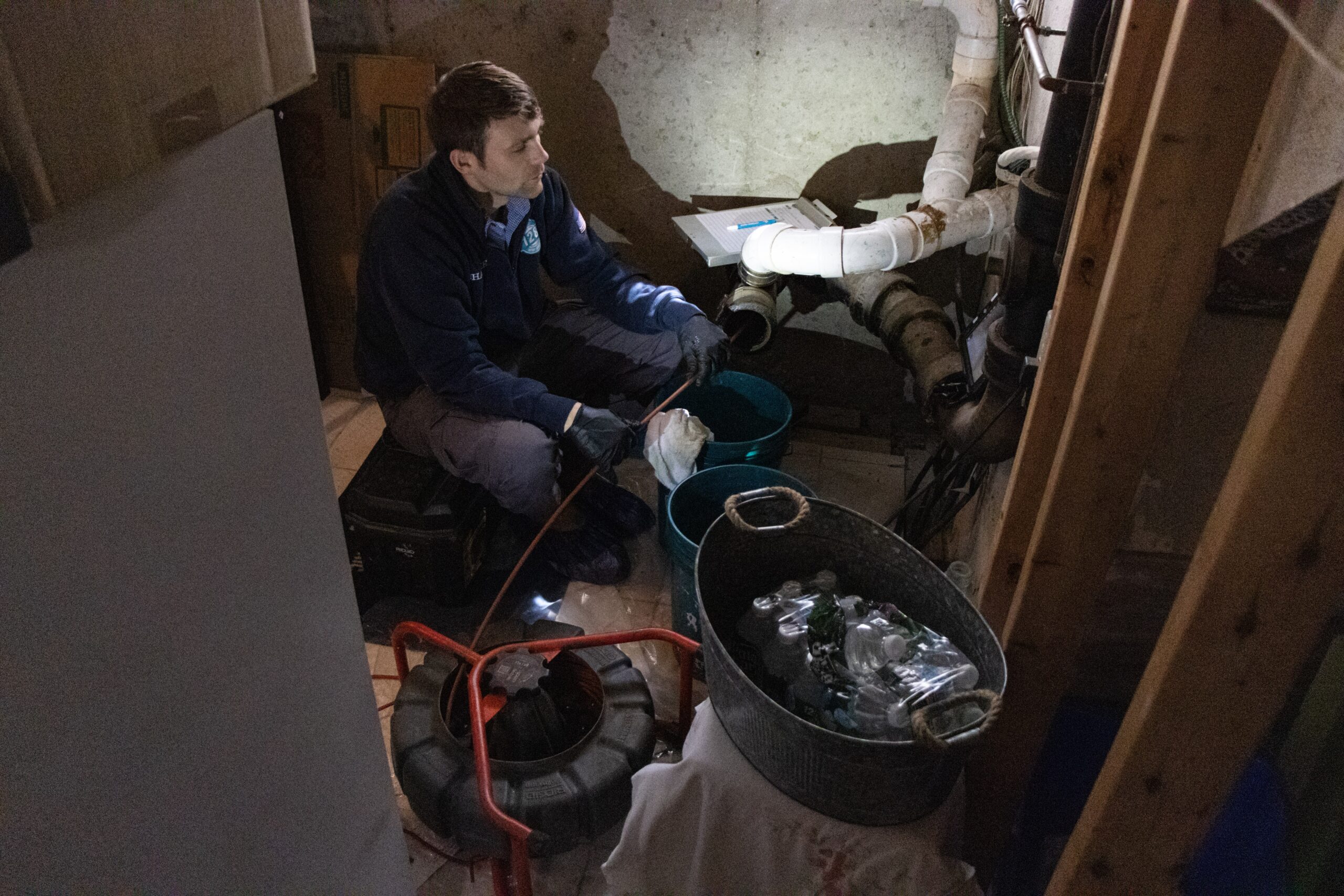
If you are dealing with a clog that will not clear, multiple slow drains at once, or anything that points toward the main line, it is worth having it looked at properly instead of guessing. 128 Plumbing, Heating, Cooling & Electric uses video camera inspections to see exactly what is happening inside the pipe before recommending a fix, whether that is straightforward drain cleaning, root-cut and clearing, or trenchless pipe lining for an older pipe that keeps failing in the same spot. You can see the full range of options on our drain services page.
128 Plumbing, Heating, Cooling & Electric has served Massachusetts and New Hampshire homeowners since 1992, and is the top-reviewed home services company in Massachusetts, which matters most on jobs like this one, where you cannot see what is actually wrong until someone with the right equipment looks.
Frequently Asked Questions
What usually causes a clogged drain?
In bathrooms, hair and soap residue are the most common cause. In kitchens, it is typically grease, oil, and food scraps. Mineral buildup from hard water and root intrusion in the main sewer line are also common, especially in older homes.
How do I know if a drain is just slow or actually clogged?
Slow draining, standing water, gurgling sounds, and odors coming from the drain are all early signs of a clog. If more than one fixture is affected at the same time, the issue is likely further down the line rather than in a single pipe.
How can I prevent drains from clogging in the first place?
Use a drain cover to catch hair, dispose of grease in the trash instead of the sink, avoid putting coffee grounds or fibrous scraps down the garbage disposal, and only flush toilet paper and human waste.
When should I call a professional instead of trying to fix it myself?
Call a professional if a clog keeps recurring, if multiple drains are slow at once, if you notice gurgling in other fixtures, or if you suspect tree roots or a main sewer line issue. 128 Plumbing, Heating, Cooling & Electric can diagnose the exact cause with a camera inspection rather than guessing.
Get It Fixed for Good
128 Plumbing, Heating, Cooling & Electric has been clearing drains and diagnosing sewer line issues for Massachusetts and New Hampshire homeowners since 1992. Ask about our membership plans for priority scheduling, or see why homeowners have made us the top-reviewed home services company in Massachusetts.