Winter arrives fast in Massachusetts. We’ve all been there; the heat’s on in the morning, A/C in the afternoon, and then suddenly there’s snow on the ground. It’s time to winterize your home before the real cold settles in. A little prep now can spare you the headache of frozen pipes, surprise no-heat emergencies, cracked plumbing, and even a thermostat that quits at the worst possible moment.
Here are four steps you can take to get your home ready for winter:
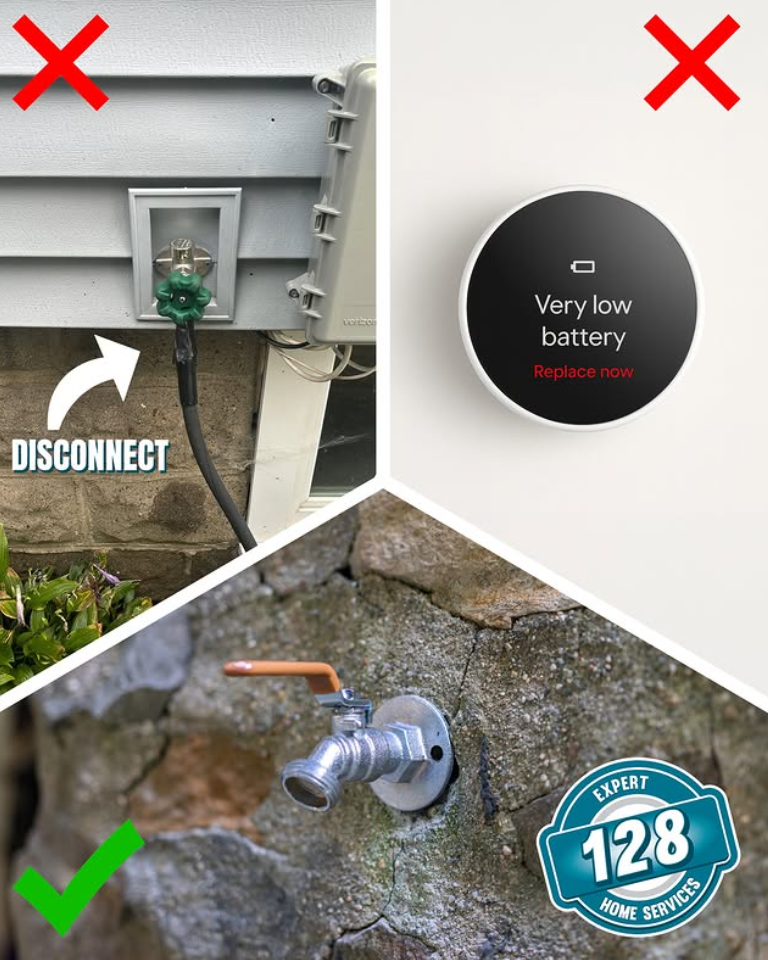
- Disconnect every outdoor hose and store them for the season. Leaving a hose attached can trap water inside the line and can lead to a cracked spigot. After the hose is off, turn off the spigot from inside your home (it’s usually in the basement). Then go back outside and make sure the spigot drains fully.
- If you have a sprinkler system, schedule your winterization with a professional. Sprinkler lines are shallow and freeze quickly. Even if it seems like “it’s going to be a mild winter,” skipping this step can cause damage when an inevitable New England winter comes our way.
- Check the batteries in your thermostat. If your thermostat runs on batteries, pop the cover and replace them now. Dead batteries can shut down your thermostat with zero warning
- Take precautions to avoid frozen pipes. Even if it’s happened before, it can happen again. Insulate pipes near exterior walls and keep cabinet doors open on extra-cold nights to let warm air circulate.
If you run into any winter emergencies, the team at 128 Plumbing, Heating, Cooling, and Electric is ready to help. Whether it is a frozen pipe, a broken thermostat, or a heating system that suddenly refuses to cooperate, we have your back so you can stay warm and stress-free all season long.
FAQs
What can I do to prep my home for winter?
To prep your home for winter, insulate exposed pipes and drain outdoor hoses to prevent frozen pipes, service your HVAC system, check your thermostat batteries, replace filters for efficient heating, and check electrical outlets, cords, and your breaker panel while ensuring backup power sources are ready.
What causes pipes to freeze?
Frozen pipes are usually caused by prolonged exposure to cold temperatures, especially when pipes aren’t properly insulated. Pipes in unheated areas like basements, attics, garages, or exterior walls are most at risk. Letting water sit in pipes without flow during freezing weather can also increase the chance they’ll freeze.
Can I avoid my pipes freezing again?
You can usually avoid another frozen pipe by keeping your home a bit warmer during cold snaps, letting faucets drip, and adding insulation to pipes in chillier areas. Opening cabinet doors under sinks also helps warm air reach those pipes.