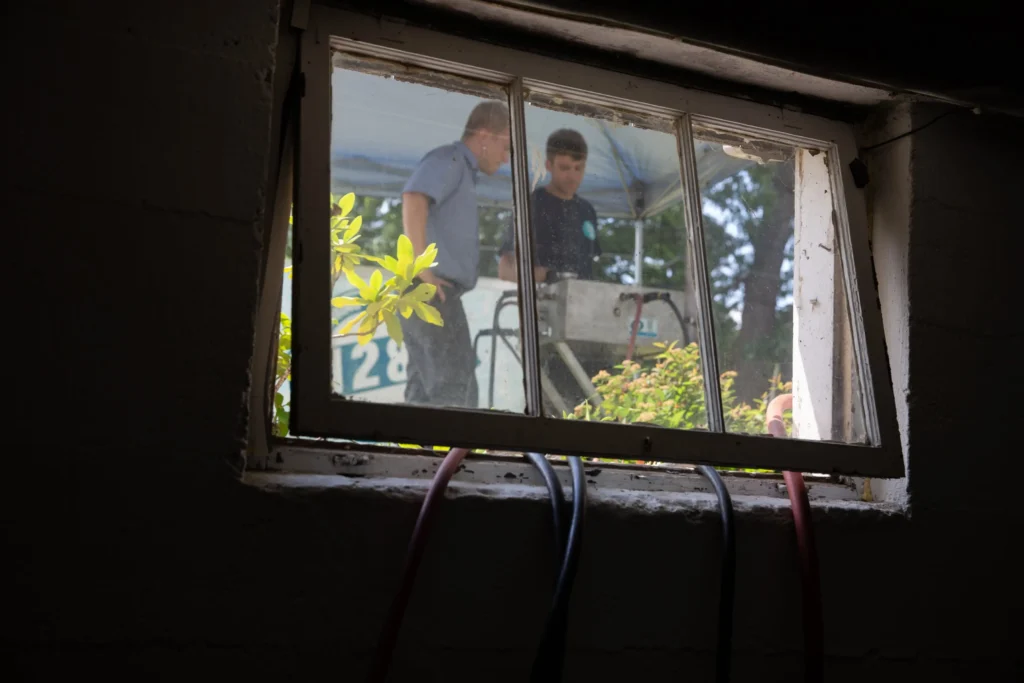
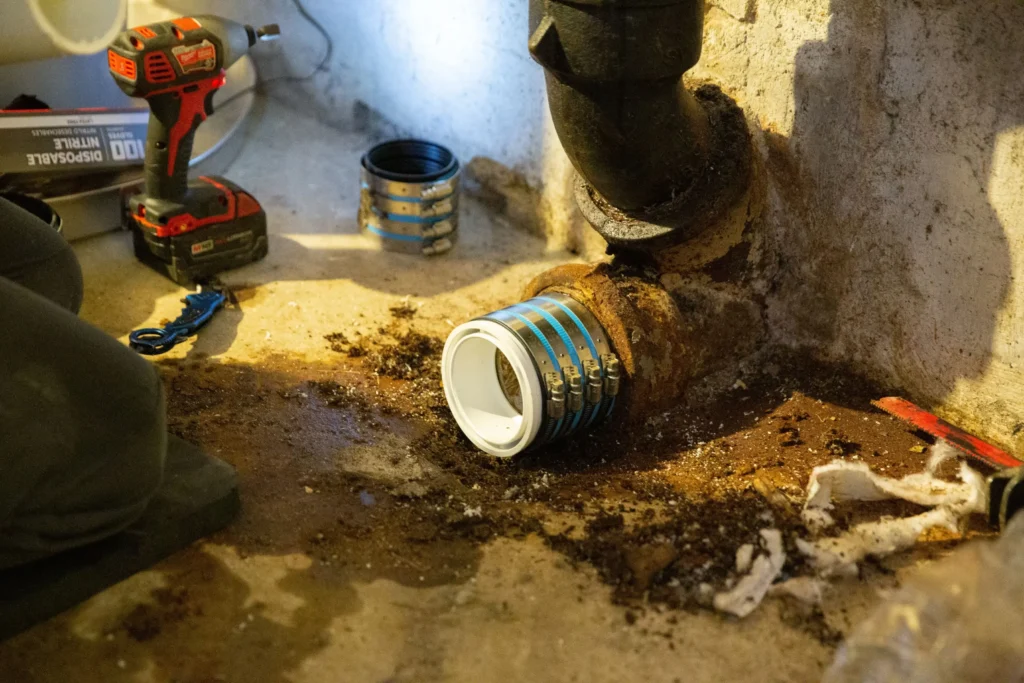
Trenchless pipe lining repairs a damaged sewer line from the inside, without digging up your yard, driveway, or basement floor. A resin-coated liner is installed inside the old pipe and cured in place, creating a new, seamless pipe that is commonly rated to last 50 years. It’s the right fix for cracked, corroded, or root-damaged clay and cast iron lines, and most residential jobs are finished in a day or two. The only way to know if your pipe qualifies is a camera inspection.
If you’ve been told your sewer line needs to be replaced, or you keep dealing with backups that come right back after cleaning, this guide covers what trenchless lining costs, how it works, and whether your pipe is a good candidate. 128 Plumbing, Heating, Cooling & Electric has been repairing sewer lines across Massachusetts and New Hampshire since 1992.
Dealing with sewer backups or told you need a new sewer line? Start with a camera inspection from 128 Plumbing, Heating, Cooling & Electric, serving Massachusetts and New Hampshire since 1992.


What Is Trenchless Pipe Lining?
Trenchless pipe lining, also called cured-in-place pipe (CIPP) lining, rebuilds a damaged pipe from the inside. A flexible liner saturated with resin is pulled or inverted into the existing pipe, then inflated and cured so it hardens against the old pipe walls. The result is a smooth, jointless “pipe within a pipe” that seals cracks, stops root intrusion, and restores flow.
Because the work happens through existing access points like a cleanout, there’s no trench across your lawn or hole through your driveway. Learn more on our trenchless pipe lining service page.
Watch: When to Snake, When to Jet, and When to Line
Not every sewer problem needs lining. Jeff from our team explains how we decide between a drain snake, hydrojetting, and pipe lining. For the full breakdown, read drain snake vs. hydrojetting vs. pipe lining.
How Much Does Trenchless Pipe Lining Cost?
The cost depends on your specific pipe, which is why an accurate price starts with a camera inspection. The biggest factors are:
- Length of pipe being lined: a short section repair costs less than lining the full line from the house to the street
- Pipe diameter and material: clay, cast iron, and PVC each prepare differently
- Access: whether there’s an existing cleanout, or one needs to be installed
- Bends and connections: more turns and branch lines mean more work to reopen connections after lining
- Cleaning required: heavy roots, grease, or scale need hydrojetting before the liner goes in
- Condition of the pipe: sections that have collapsed may need a small excavation along with lining
When comparing prices, remember that dig-and-replace quotes often leave out restoration. Repaving a driveway, relandscaping a yard, or patching a basement slab can add significantly to the final bill. Lining avoids most of those costs. 128 Plumbing, Heating, Cooling & Electric gives you upfront pricing before any work begins, and financing options are available for larger sewer repairs.
Want a real number for your home? Book a camera inspection and get upfront pricing before any work begins.
Is Your Pipe a Good Candidate for Lining?
Lining is usually a great fit if your pipe has:
- Cracks or small breaks
- Tree root intrusion at the joints
- Corrosion or scaling, common in older cast iron
- Separated or leaking joints, common in older clay lines
- Recurring backups that return soon after cleaning
Lining may not be the right fix if your pipe has:
- A fully collapsed section
- A severe belly (a sag where water and waste collect)
- Major offsets where pipe sections have shifted out of line
- Badly deformed Orangeburg (fiber) pipe
In those cases, a targeted excavation or sewer repair may be needed, sometimes combined with lining on the rest of the line. A camera inspection shows exactly which situation you’re in.
Not sure if your sewer line qualifies? A camera inspection will tell you, and we’ll show you the footage.
Signs Your Sewer Line May Need Lining
- Multiple drains backing up or draining slowly at the same time
- Water coming up through a basement floor drain
- Gurgling toilets or drains
- Sewer odors inside or outside the house
- Soggy spots or unusually green patches of lawn over the sewer line
- Clogs that return within weeks of being cleared
Many homes across Greater Boston, the North Shore, and the Merrimack Valley still have their original clay or cast iron sewer lines, and those pipes are now well past the age where cracks, corrosion, and root problems become common.
How the Trenchless Pipe Lining Process Works
- Camera inspection: a camera is run through the line to locate damage and confirm lining is the right fix. You can watch, and we’ll share the footage.
- Cleaning: the pipe is cleared of roots, debris, and buildup, usually with hydrojetting, so the liner bonds properly.
- Measuring and preparing the liner: the liner is cut to length and saturated with resin.
- Installation: the liner is pulled or inverted into the pipe and inflated so it presses against the old pipe walls.
- Curing: the resin hardens in place, forming the new pipe. This typically takes a few hours.
- Reopening connections: any branch lines are reopened from inside the pipe.
- Final camera inspection: the finished pipe is recorded so you can see the result.
Most residential jobs are completed in one to two days, and water use is only limited during the installation and curing window.
Trenchless Pipe Lining vs. Traditional Pipe Replacement
| Compare | Trenchless Pipe Lining | Traditional Dig and Replace |
| Digging | Little to none, uses existing access points | Trench along the full length of the pipe |
| Typical timeline | Usually one to two days | Often several days, plus restoration |
| Yard, driveway, and landscaping | Left intact | Torn up and restored afterward |
| Restoration costs | Minimal | Often significant (pavement, lawn, basement slab) |
| Result | New seamless, jointless pipe inside the old one | New pipe with joints |
| Best when | Pipe is cracked, corroded, or has root intrusion but still holds its shape | Pipe has fully collapsed or has severe sags |
Traditional excavation is still the right answer when a pipe has fully collapsed or has a severe sag. For everything else, lining is usually faster, less disruptive, and less expensive once restoration costs are counted.
Told you need a full dig and replace? Get a second opinion and find out if lining can save your yard.
Why Homeowners Trust Us With Their Sewer Lines
128 Plumbing, Heating, Cooling & Electric has served homeowners across Massachusetts and New Hampshire since 1992, and homeowners have made us the most reviewed home services company in New England. Read the reviews. Here’s what you can expect:
- A camera inspection and a clear explanation before any work is recommended
- Upfront pricing, with financing available
- Licensed, insured technicians
- An honest recommendation, even if that means a simpler fix than lining
- Final camera footage of the finished pipe
We provide trenchless pipe lining and sewer repair across our service area, including trenchless pipe repair in Wakefield, MA, sewer line repair in Chelmsford, MA, and sewer line repair in Seabrook, NH.
Frequently Asked Questions
How much does trenchless pipe lining cost?
Cost depends on the length and diameter of the pipe, access, the number of bends and connections, how much cleaning is needed, and the pipe’s condition. 128 Plumbing, Heating, Cooling & Electric provides upfront pricing after a camera inspection, and financing is available.
How long does trenchless pipe lining last?
Cured-in-place pipe liners are commonly rated to last 50 years, and the seamless, jointless design removes the weak points where roots and leaks usually start.
Does homeowners insurance cover trenchless pipe lining?
It depends on your policy and the cause of the damage. Many policies exclude gradual wear, tree roots, and age-related deterioration, but some offer sewer line coverage as an add-on. Check with your insurer. We can provide camera footage and documentation to support a claim.
Does pipe lining work on cast iron and clay pipes?
Yes. Lining is commonly used on older cast iron and clay sewer lines with cracks, corrosion, or root intrusion. Pipes that have fully collapsed or have severe sags may need excavation instead.
How long will my water be off during pipe lining?
Most residential jobs are completed in one to two days. Water use is only limited during installation and curing, and your technician will tell you exactly when you can use your drains again.
Do I need a permit for sewer line lining in Massachusetts?
Permit requirements vary by town. 128 Plumbing, Heating, Cooling & Electric checks local requirements and pulls any permits needed for your job.
Find Out If Trenchless Lining Can Save Your Sewer Line
128 Plumbing, Heating, Cooling & Electric has served Massachusetts and New Hampshire homeowners since 1992, and homeowners across the region have made us the most reviewed home services company in New England. Book a camera inspection, see the footage yourself, and get upfront pricing before any work begins.