
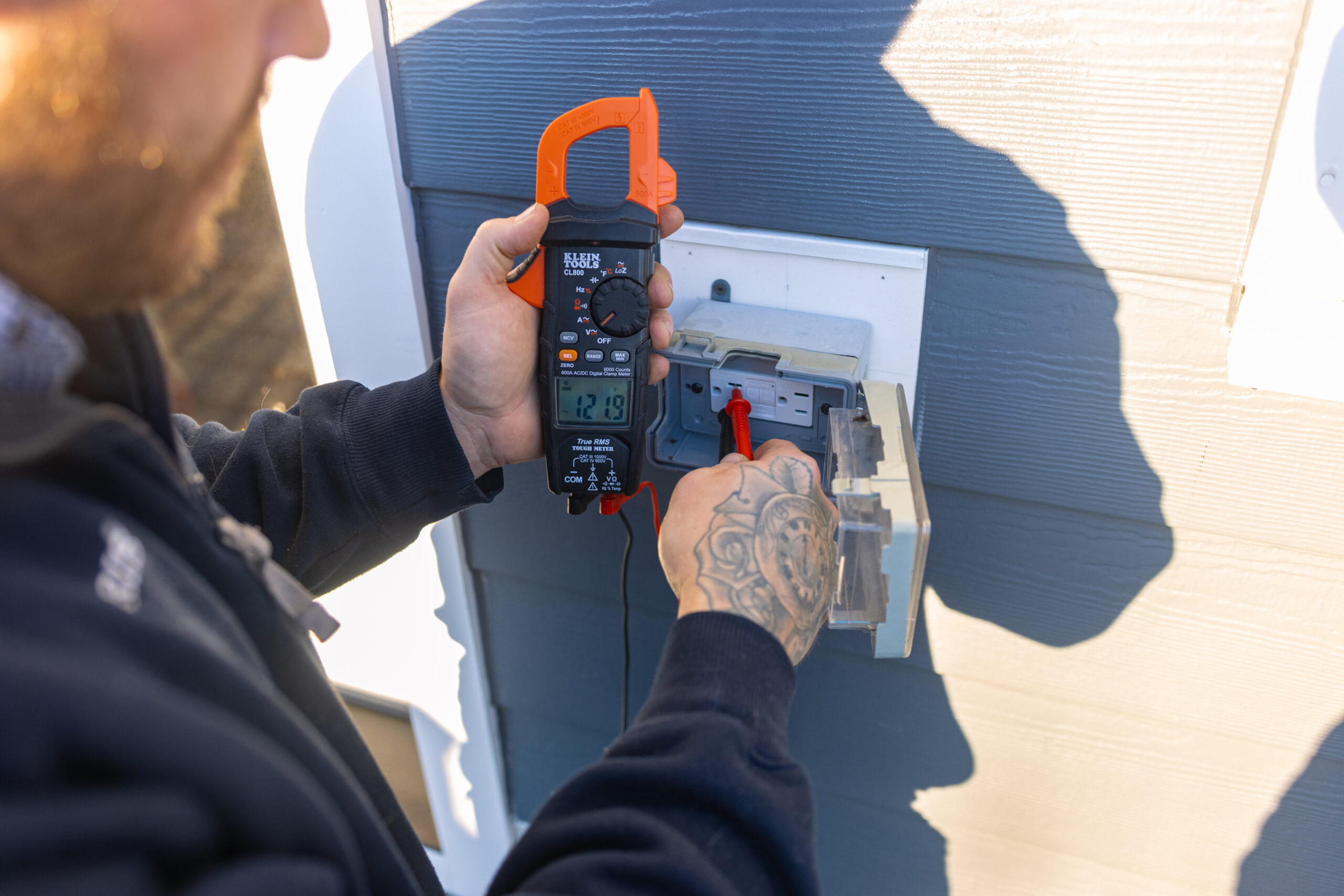
Short answer: You need GFCI (ground fault circuit interrupter) protection on outlets anywhere electricity and water can meet: bathrooms, kitchens, laundry areas, garages, basements, crawl spaces, outdoors, and within 6 feet of any sink, tub, or shower. Dishwashers and outlets under the kitchen sink need it too. A GFCI shuts off power in a fraction of a second when it senses current leaking where it shouldn’t, which prevents serious shocks. Many older Massachusetts homes are missing GFCIs in these spots, so it’s worth checking yours.
Nick from the 128 Plumbing, Heating, Cooling & Electric electrical team says the same three places come up again and again in older homes: outlets near the washing machine, the dishwasher, and the garbage disposal with no GFCI protection. Here’s where you need them, how to tell if you have them, and how to test them.
Not sure if your outlets are protected? 128 Plumbing, Heating, Cooling & Electric can check your home and install GFCIs wherever they’re needed.


What Is a GFCI Outlet?
A GFCI, or ground fault circuit interrupter, is an outlet (or circuit breaker) that constantly compares the electricity flowing out on one wire with the electricity coming back on the other. If even a tiny amount goes missing, often because it’s flowing through water or a person, the GFCI cuts power almost instantly. That quick shutoff is what prevents a serious or fatal shock.
You’ll recognize a GFCI outlet by the TEST and RESET buttons in the middle. You may also hear it called a GFI outlet. It’s the same thing.
Watch: Where Older Homes Are Missing GFCIs
Nick walks through the spots where he most often finds missing GFCI protection. Almost a third of Massachusetts homes were built before 1940, long before GFCIs existed, so many still have unprotected outlets near water.
Where Do You Need GFCI Outlets? Room by Room
| Location | Why It Needs GFCI Protection | Commonly Missed in Older Homes? |
| Bathrooms | Sinks, tubs, and showers put water inches from outlets | Sometimes |
| Kitchens | Countertop outlets near sinks, plus appliance circuits | Yes |
| Dishwasher and under the sink | Water supply and drain lines sit next to the outlet | Yes, very often |
| Laundry areas | Washing machines and utility sinks | Yes, very often |
| Basements and crawl spaces | Damp floors, sump pumps, and possible flooding | Yes |
| Garages | Concrete floors, tools, and outdoor exposure | Yes |
| Outdoors | Rain, snow, and wet ground | Sometimes, and older covers often aren’t weatherproof |
| Within 6 feet of any sink, tub, or shower | Water and electricity in close contact | Yes |
Current electrical code requires GFCI protection in all of these locations for new work. If your home was built or last rewired decades ago, many of these outlets may still be unprotected. If you’re replacing an outlet in one of these areas, the new one generally has to be GFCI protected. See our switches and outlets services for installation and replacement.
Missing GFCIs near your washer, dishwasher, or disposal? We can add protection quickly and safely.
Why Older Massachusetts Homes Are Often Missing GFCIs
GFCIs didn’t become standard until the 1970s, and requirements have expanded steadily since then. Kitchens, basements, laundry areas, and appliance outlets were added to the list over time. Almost a third of Massachusetts homes were built before 1940, so a lot of houses have outlets that met code when they were installed but don’t offer the protection homeowners expect today.
Older homes can also have two-prong ungrounded outlets or outdated wiring. A GFCI is one code-approved way to add shock protection to an ungrounded outlet, but it’s a good idea to have the wiring evaluated at the same time. If your home has original wiring, read how to spot knob and tube wiring and learn about knob and tube replacement.
How to Tell If an Outlet Is GFCI Protected
- Look for TEST and RESET buttons on the outlet itself.
- Look for a small “GFCI Protected” sticker. One GFCI outlet can protect other outlets downstream on the same circuit, so an outlet without buttons may still be protected.
- Check your electrical panel for GFCI breakers, which also have a TEST button.
- Use a plug-in outlet tester with a GFCI button, available at most hardware stores.
If an outlet near water has no buttons, no sticker, and no GFCI breaker feeding it, assume it isn’t protected.
How to Test a GFCI Outlet
- Plug a lamp or nightlight into the outlet and turn it on.
- Press the TEST button. You should hear a click and the light should go off.
- Press RESET. The light should come back on.
Test your GFCIs once a month. If the light stays on after pressing TEST, the outlet won’t reset, or it trips constantly for no clear reason, the GFCI may have failed and should be replaced. GFCIs wear out over time, and a failed one can keep supplying power without protecting you.
GFCI won’t reset or keeps tripping? Our licensed electricians can find out why and fix it.
When to Call a Licensed Electrician
In Massachusetts, electrical work generally has to be done by a licensed electrician, and for good reason. Call a professional if a GFCI won’t reset, trips repeatedly, feels warm, or shows scorch marks, or if you want protection added to several rooms at once. Frequent tripping can point to a wiring problem, moisture in an outdoor box, or a failing appliance.
128 Plumbing, Heating, Cooling & Electric offers electrical repair, circuit and wiring services, and an Electrical Safeguard Check that looks at outlets, panels, and wiring throughout your home. We’ve served Massachusetts and New Hampshire homeowners since 1992, and homeowners have made us the most reviewed home services company in New England. Read our reviews.
Related Electrical Services
Frequently Asked Questions
Where are GFCI outlets required in a house?
GFCI protection is required in bathrooms, kitchens, laundry areas, garages, basements, crawl spaces, outdoors, and within 6 feet of sinks, tubs, and showers. Dishwashers and outlets under the kitchen sink also need protection under current code.
What’s the difference between a GFI and a GFCI outlet?
There is no difference. GFI (ground fault interrupter) and GFCI (ground fault circuit interrupter) are two names for the same device.
Do older homes in Massachusetts have to add GFCI outlets?
Existing outlets that met code when installed generally don’t have to be upgraded, but replacements in locations that now require GFCI protection usually must be GFCI protected. Adding GFCIs is one of the simplest safety upgrades for an older home, and 128 Plumbing, Heating, Cooling & Electric can install them wherever they’re needed.
How often should I test my GFCI outlets?
Test them once a month by pressing TEST and then RESET. If the outlet doesn’t cut power when you press TEST, or won’t reset, it should be replaced.
Why does my GFCI outlet keep tripping?
Frequent tripping can be caused by moisture in an outdoor or basement outlet, a faulty appliance, too many devices on the circuit, a wiring problem, or a worn-out GFCI. A licensed electrician can find the cause and fix it safely.
Can a GFCI outlet protect other outlets?
Yes. A GFCI outlet installed first on a circuit can protect other outlets downstream. Those outlets should be labeled with a “GFCI Protected” sticker.
Make Sure Every Outlet Near Water Is Protected
128 Plumbing, Heating, Cooling & Electric has served Massachusetts and New Hampshire homeowners since 1992, and homeowners across the region have made us the most reviewed home services company in New England. Our licensed electricians can check your outlets, install GFCIs where they’re needed, and give you upfront pricing before any work begins.